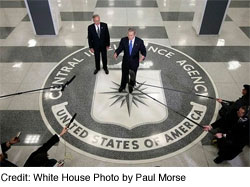
 Access to opinions and codes is of particular interest to the bloggers at Justia. We complain mightily about private citation formats, paywalls to codes and caselaw online, privatization of court services and filings, and the government’s overall failure to provide us with official, free access to the public record. Last week’s news about the reauthorization of the FISA Amendments Act, however, highlights an altogether different problem of access to the law: secret, sealed court opinions from the nation’s Foreign Intelligence Surveillance Act Court. This body of law is not available for free or for purchase. It is sealed and hidden from the American people.
There is plenty of news coverage about the Act, and plenty of opinions online about the threat it poses to the freedom and privacy of Americans and non-Americans here and abroad. I’d like to highlight the problem of access to the output of the FISA Courts, and why we are still in the dark about their decisions – decisions that are legally binding precedent but that we know nothing about.
 Yesterday, Google was named in a
  The European Union (EU) is expected to announce legal action against
  On Wednesday, New York City
 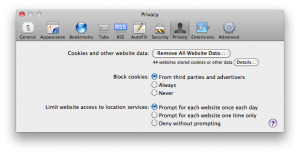 Several privacy lawsuits against Google, Inc. have been consolidated in the U.S. District Court for the District of Delaware following a ruling by the Judicial Panel on Multidistrict Litigation (JPML). In
  Yahoo! Mail user Albert Rudgayzer sued the Silicon Valley web portal yesterday, charging that Yahoo’s revelation of users first and last names when they send email violates the portal’s own Terms of Service (‘TOS’), constituting a breach of contract. He seeks relief under
  Last week, Netflix announced some big changes in their structure and offerings. First, they will
  Update: In a