by

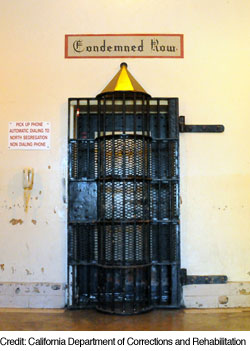
California State Senator Loni Hancock (D-Alameda) recently introduced Senate Bill 490, which seeks to abolish the death penalty in California. This is the first time that the California Legislature has considered the issue of capital punishment since the current statute was enacted in 1978.

After Gregg vs. Georgia reinstated capital punishment nationwide, California voters approved the current death penalty law in a referendum. To amend that law, SB 490 must be approved by the voters because state law mandates that referendums can only be repealed at the ballot box.

If California voters approve SB 490, first-degree murder with one or more special circumstances will be punished by life without the possibility of parole. The death penalty option would no longer be available. Additionally, the state would halt future executions and commute all existing death sentences to life without parole.

The impetus for this effort comes from a Loyola of Los Angeles Law Review article authored by U.S. Court of Appeals for the Ninth Circuit Senior Judge Arthur L. Alarcon and Loyola Law School Los Angeles Adjunct Professor of Law Paula M. Mitchell. Their study contended that the abolition of capital punishment in California could save the state $1 billion dollars every five or six years. The study also found that “the state’s 714 death row prisoners cost $184 million more per year than those sentenced to life in prison without the possibility of parole.”

Don Heller, the author of the original enacting initiative, supports Senator Hancock’s bill. Heller has since come to “fervently believe” that capital punishment should be abolished. He says that when the law was drafted in 1978, his office grossly underestimated the costs to the state. He argues that each execution since the death penalty was reinstated under that law has cost the state $330 million, and it’s simply not worth it. It should be noted that the American Law Institute, which promulgates the Model Penal Code (upon which many states base their own statutes), has also reversed its position, taking capital punishment out of the model code.


Posted in: Laws, Legal News
by

No State Use TaxesEarlier this month, I wrote about Amazon terminating its Amazon Associates program in California in wake of the Golden State passing ABX1 28, a new law that imposed use tax collection duties on certain out-of-state retailers.

Last week, Amazon upped the stakes when Charles T. Halnan, an Amazon lobbyist, submitted a proposed statewide referendum to Attorney General Kamala D. Harris regarding Section 1 of ABX1 28. That section states that retailers with an affiliate or corporate nexus with the State of California must collect use taxes from their California customers who have purchased tangible personal property.


Posted in: Laws, Legal News
by

Medical MarijuanaIn response to the increasing number of states that have authorized medical marijuana use during the past two years, the U.S. Department of Justice recently issued a memorandum to its field offices regarding federal enforcement of the Controlled Substances Act in such states. Many fear that the memo signals an impending federal crackdown on the production, distribution and possession of marijuana in these states, in contrast to the previously relaxed stance toward prosecution. To better understand the situation, here’s a background on the law.

State Laws

State laws regulating marijuana use can be divided into two categories: decriminalization laws and those that authorize medical use of marijuana. De-criminalization refers to the reduction of penalties for possession of small amounts of marijuana for personal use. Decriminalization statutes do not legalize possession, but treat it as a civil offense that subjects an offender to a monetary fine, instead of incarceration.


Posted in: Laws, Legal News
by

Last month, Representative Charles Rangel introduced the Second Chance for Ex-Offenders Act of 2011. The Act allows certain individuals convicted of nonviolent offenses to petition for an expungement upon completion of their sentence and satisfaction of other substance abuse, educational, and community service requirements.

So, what does this bill exactly propose to expunge?

Upon order of expungement, all official law enforcement and court records, including all references to such person’s arrest for the offense, the institution of criminal proceedings against him, and the results thereof, except publicly available court opinions or briefs on appeal, shall be expunged (in the case of nontangible records) or gathered together and sealed (in the case of tangible records).


Posted in: Laws, Legal News
by

Last week, in Coalition to Defend Affirmative Action v. Regents of University of Michigan, the U.S. Court of Appeals for the Sixth Circuit struck down an amendment to the Michigan constitution that prohibited the state’s public colleges and universities from granting “preferential treatment [to] any individual or group on the basis of race, sex, color, ethnicity, or national origin.” The amendment was the result of a successful voter initiative, known as Proposal 2. In striking down the amendment, the appeals court held that  “Proposal 2 unconstitutionally alters Michigan’s political structure by impermissibly burdening racial minorities.”

Background

Proposal 2, also misleadingly known as the Michigan Civil Rights Initiative, was passed by 58 percent of Michigan voters in November 2006 and became law in December of that year. Among its notable supporters were Jennifer Gratz, plaintiff in the 2003 case Gratz v. Bollinger (where the U.S. Supreme Court ruled that students could not be given “extra points” in admissions decisions on the basis of race); Barbara Grutter, plaintiff in the Grutter v. Bollinger case of the same year (where the U.S. Supreme Court upheld the use of race as a “factor” in the University of Michigan Law School’s admissions decisions); and Ward Connerly, a former Regent of the University of California who was instrumental in the passage of Proposition 209, California’s own successful anti-affirmative action initiative of 1996.


Posted in: Legal News
by

Here is a rundown of June’s highest scoring lawyers on Justia Legal Answers, along with a look at which Onward blog and Facebook posts readers viewed the most.

Justia Legal Answers’ Top 10 Legal Answerers for June 2011

  1. Albert Pettigrew Jr, 1,300 points, 26 answers
  2. J. Richard Kulerski Esq., 830 points, 17 answers
  3. Mr. Andrew T. Bodoh Esq., 550 oints, 11 answers
  4. Cedulie Renee Laumann, 550 points, 11 answers
  5. Robert James Reynolds, 530 points, 11 answers
  6. Nicholas Leydorf, 450 points, 9 answers
  7. Andrew Bresalier, 350 points, 7 answers
  8. Matthew Lee Spiegel, 330 points, 7 answers
  9. Cynthia Jean Nelson, 300 points, 7 answers
  10. Craig Orent, 300 points, 6 answers


by

All of us at Justia – human and pup alike – would like to wish everyone a Happy 4th of July!

Given what we do here, it shouldn’t be any surprise that we’d also like to declare this Free Law Independence Day. To paraphrase Richard Henry Lee’s famous resolution,  and with a little help from our friends at Law.gov, let it be resolved:

That Law is, and of right ought to be, free and independent. That it should readily be available to all without allegiance to any one publisher, and that all connection to direct fees for dissemination of primary legal materials should be totally dissolved.


Posted in: Justia News
by

Two days ago, Amazon sent out a “Notice of Contract Termination Due to Potential New California Law” to its Amazon Associates in California. The letter warned that Amazon would terminate its affiliate program with California residents if the state required out-of-state retailers, such as Amazon, to start collecting use taxes if they paid referral commissions to persons within the state.

For well over a decade, the Amazon Associates Program has worked with thousands of California residents. Unfortunately, a potential new law that may be signed by Governor Brown compels us to terminate this program for California-based participants. It specifically imposes the collection of taxes from consumers on sales by online retailers – including but not limited to those referred by California-based marketing affiliates like you – even if those retailers have no physical presence in the state.

We oppose this bill because it is unconstitutional and counterproductive. It is supported by big-box retailers, most of which are based outside California, that seek to harm the affiliate advertising programs of their competitors. Similar legislation in other states has led to job and income losses, and little, if any, new tax revenue. We deeply regret that we must take this action.

As a result, we will terminate contracts with all California residents that are participants in the Amazon Associates Program as of the date (if any) that the California law becomes effective. We will send a follow-up notice to you confirming the termination date if the California law is enacted.


Posted in: Legal News
by

A hat tip to Rob Richards at the Legal Informatics Blog for alerting us that the National Conference of Commissioners on Uniform Laws (NCCUSL) will meet on July 7th to consider adopting The Uniform Electronic Materials Act (the Act).  As Rob notes in his post, the Act aims to “establish uniform legal standards for the authentication and preservation of U.S. state legal information in digital formats.” The Act also touches on issues around accessibility, noting its importance in helping create informed citizens.


by

Last week, the Mexican Senate passed a resolution asking the President not to sign ACTA, the Anti-Counterfeiting Trade Agreement. With this resolution, the Mexican Senate is the first in the world to reject this treaty that has been pushed in several countries under different names, such as “Ley Sinde” in Spain and “Ley Lleras” in Colombia and many others. This proposal was approved unanimously by all members of the Senate’s Defense, National Security and Education commissions.

After six months of consultations with the community, industry and authors, the Senate decided to reject ACTA because the treaty could criminalize the transmission of documents, books or songs over the Internet. The Senate committees were concerned that such treatment could impede society’s access to information and culture.


Posted in: Legal News
Tagged: ACTA, Mexico