


“Juneteenth is recognized by Americans everywhere as…”
Writer’s Picks 6/18: Fake Lawyers, Journalist Access, and Lead Paint
Some noteworthy cases this week, as reported by our Daily Summary Writers.
The 10th Circuit reversed a sentencing ruling for a defendant found to be practicing law without a license. In US v. Kieffer, the Court found that “By all appearances, Defendant Howard Kieffer had a successful nationwide criminal law practice.” What he didn’t have was a license to go with that practice. He never attended law school, sat for a bar exam, or received a license to practice law. He was convicted of mail fraud, making false statements, wire fraud, and contempt of court. On appeal, the 10th Circuit remanded for resentencing, finding errors in the trial court’s sentencing calculations.
The 5th Circuit issued a ruling involving the First Amendment and journalistic access. In United States v. Aldawsari, a journalist appealed the district court’s gag order preventing a terrorism suspect and his legal team from speaking to the media. The journalist argued that the gag order violated his First and Fifth Amendment rights. The 5th Circuit concluded that the gag order affected appellant’s right to gather news and therefore, he had standing to challenge it. However, on the merits, appellant had not shown that the gag order violated the First Amendment since the gag order was not overly broad on its face. Additionally, the gag order did not violate the Fifth Amendment because the denial of his motion to intervene did not limit his right to earn a living through news gathering in violation of his due process rights.
Posted in:
Legal News
Flag Day 2012
36 U.S. Code § 110 designates June 14 as Flag Day to commemorate the anniversary of the adoption of the Stars and Stripes as the official flag of the United States by the Continental Congress on June 14, 1777.
Here are some proclamations by the President and governors in observance of Flag Day.
Posted in:
Legal News
Tagged:
Flag Day
Google, AOL Face Patent Suit Over ‘Snippet’ Search Results, Ads
 Google and AOL were sued for patent infringement Thursday by New Jersey-based Suffolk Technologies, LLC over their Internet search summary descriptions, or ‘snippets.’
Suffolk’s lawsuit also alleges that AOL and Google are infringing a second patent for an “Internet server and method of controlling an internet server”. The second claim alleges that AOL’s Advertising.com ad platform and Google’s AdSense service each infringe this patent. The lawsuit was filed in U.S. District for the Eastern District of Virginia where AOL is based.
Here are more details on the patent lawsuit, and the complaint (below).
“Respect my authoritah!” The South Park Gang wins a Fair Use Fight & More in Our Weekly Writer’s Picks
We’ve got three picks from our writers this week – enjoy!
Don’t Even Think of Parking Here
Feloney v. Baye
Nebraska Supreme Court (6/1/12)
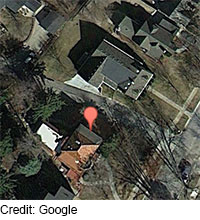 For several years, Michael Feloney used his neighbor Robert Baye’s driveway to turn his vehicle to enter his garage. Eventually Baye decided to build a retaining wall on his driveway, which prevented Feloney from using Baye’s driveway. Feloney sued Baye, requesting the district court to impose a prescriptive easement on Baye’s driveway for ingress and egress. The district court granted summary judgment for Baye, concluding (1) Feloney’s use of the driveway was permissive under the “unenclosed land” rule, which provides an exception to the rule presuming adverseness when the use is over unenclosed land; and (2) thus Feloney could not prove the elements required for a prescriptive easement. The Supreme Court affirmed but for different reasons, holding (1) the presumption of permissiveness arises when the land is unenclosed wilderness and does not apply in urban settings such as in this case; (2) when the owner of a property has opened or maintained a right of way for his own use and the claimant’s use appears to be in common with that use, the presumption arises that the use is permissive; and (3) Feloney’s use of Baye’s driveway was presumptively permissive under this rationale.
Posted in:
Justia News
7th Circuit: ‘South Park’ Scatological ‘What What (in the Butt)’ Humor is Fair Use
 Judges know fair use and parody when they see it. Especially when it comes to South Park‘s “distinct animation style and scatological humor” as seen through the eyes of a 4th grade character.
That was the conclusion of the U.S. Court of Appeals for the Seventh Circuit Circuit today (read it below) when it affirmed a trial court judge’s July 2011 decision to dismiss a copyright infringement lawsuit over the viral “What, What (in the Butt)” internet video by the singer Samwell.
Here is why the decision is an important victory for parody, satire, and fair use on the Internet.
Posted in:
Copyright, Entertainment, Intellectual Property, social-networking, Tech Companies, YouTube
Marino CLE lawsuit accuses ex-employee of CFAA violations, trade secret theft
 A continuing legal education company headed by Joseph Marino (inset, left), the legendary force behind a 65-year-old family-owned New York and New Jersey bar exam course, sued a former employee for alleged theft of “invaluable data” from his more recent CLE company’s business.
The Marino Institute of Continuing Legal Education, Inc. (‘Marino’ CLE’) accuses ex-employee Omar Issa (inset, right) of lifting Marino CLE trade secrets, breaching a fiduciary duty to his employer “by taking technology and…leaking confidential information and proprietary information” to his competing business while still working for Marino CLE
TiVo patent lawsuit accuses Cisco of Rocky Horror-like infringement
 Days after Cisco sued TiVo in Silicon Valley federal court for a declaratory judgment over four patents, the maker of “God’s Machine” fired back with its own lawsuit in the Eastern District of Texas, accusing Cisco of infringing the very same TiVo patents in dispute.
One of the patents being fought over is Tivo’s “Multimedia Time Warping System.” If you feel like doing the time warp again with your DVR, this patent lets you record one TV program while you’re watching another.
Here is a list and description of the four TiVo patents being litigated with Cisco:
Writer’s Picks: DOMA and more
 The big case last week was Commonwealth v. U.S. Dep’t of Health & Human Servs. out of the 1st Circuit, which found Sec. 3 of the Defense of Marriage Act, 1 U.S.C. 7 (“DOMA”) unconstitutional. Section 3 denies federal economic and other benefits to same-sex couples lawfully married in Massachusetts and to surviving spouses from those couples, by defining “marriage” as “only a legal union between one man and one woman.” “Spouse” refers “only to a person of the opposite sex who is a husband or a wife.” The court applied “a closer than usual review” based on discrepant impact among married couples and on the importance of state interests in regulating marriage and tested the rationales for DOMA, considering Supreme Court precedent limiting which rationales can be counted and the force of certain rationales.
More coverage at the WSJ Law Blog.
Posted in:
Legal News
Writer’s Picks: Piracy, Internet Dating Fraud, SSA Benefits, and Same Sex Divorce
We had some cases with interesting facts come up this week.
The United States Supreme Court issued a ruling on providing survivor benefits to children conceived by in vitro fertilization, with frozen sperm, after the father died. In Astrue v. Capato, Respondent mother of the twins applied for Social Security survivors benefits for the twins, relying on 42 U.S.C. 416(e) of the Social Security Act, which defined child to mean, inter alia, “the child or legally adopted child of an [insured] individual.” The Social Security Administration denied the application, reading the act to entitle biological children to benefits only if they were qualified to inherit as a decedent under state intestacy law. The USSC upheld this interpretation, ruling that it was more in tune with the purpose of the statute, to provide for children who were supported by the deceased wage earner.
Posted in:
Uncategorized


