


 Yesterday, Santa Monica company EMG Technology, LLC filed a lawsuit against Google Inc. in the U.S. District Court for the Eastern District of Texas, alleging a patent violation. According to the complaint, Google’s Chrome Mobile browser infringes on United States Patent No. 7,441,196, entitled “Apparatus and Method of Manipulating a Region on a Wireless Device Screen for Viewing, Zooming and Scrolling Internet Content.”
EMG Sues Google Over Touch Screen Navigation Patent
Appeals Court Stays One of Two Preliminary Injunctions Against Samsung in Patent Case By Apple
 The U.S. Court of Appeals for the Federal Circuit has issued a temporary immediate stay on the preliminary injunction a federal judge issued on Tuesday against Samsung for the Galaxy Nexus.
In a separate order, the court denied a motion for an immediate stay on the preliminary injunction for the Galaxy Tab 10.1.
Court Threatens to Sanction Ceglia, Again, in New Facebook Case Decision
 Today U.S. Magistrate Judge Leslie Foschio warned that the court is “more than suspicio[us] that” plaintiff Paul Ceglia” filed no less than five (5) motions against Facebook and CEO Mark Zuckerberg, in his lawsuit claiming a fifty-percent (50%) ownership of the company, “solely to unreasonably and vexatiously multiply the proceedings.”
Judge Foschio ordered Ceglia to explain within ten days why he should not be sanctioned yet again in the “contentious” litigation.
This could be the second time that Ceglia would be sanctioned in the case.
The case involves Ceglia’s purported claims to having a 2003 contract with Zuckerberg giving him ownership of one-half of Facebook. The Silicon Valley-based social media giant and CEO Mark Zuckerberg contend that the alleged contract Ceglia claims to have is a forgery, and that the case should be dismissed.
Read the new 43-page order here:
National Federation of Independent Business et Al. v. Sebelius, Secretary of Health and Human Services, et al.
Obamacare and a Year of Legal Commentary
 Tomorrow brings one of the most highly anticipated decisions by the U.S. Supreme Court in recent years: the ruling on the constitutionality of the health-care law that is arguably the crowning achievement of President Obama’s first term in office. Incidentally, tomorrow also marks the one-year anniversary of the launch of Verdict, Justia’s legal analysis and commentary site.
Posted in:
Justia News, Legal News
Republicans Target President Obama’s Immigration Policy
 Last week, Representative Benjamin Quayle (R-AZ) introduced the Prohibiting Back-door Amnesty Act. The Act seeks to nullify President Obama’s recent immigration policy change by rescinding various memoranda and directives that call for the exercise of prosecutorial discretion in not pursuing undocumented children.
A separate bill introduced by Representative Michael C. Burgess (R-TX) seeks to prohibit the Secretary of Homeland Security from granting work authorizations to aliens unlawfully present in the United States.
Posted in:
Laws, Legal News
Tagged:
Immigration, President Obama
More Google Cookie Placement Suits Consolidated After Ruling by Judicial Panel on Multidistrict Litigation
 Several privacy lawsuits against Google, Inc. have been consolidated in the U.S. District Court for the District of Delaware following a ruling by the Judicial Panel on Multidistrict Litigation (JPML). In In Re: Google Inc. Cookie Placement Consumer Privacy Litigation, the JPML found that “eight actions involve common questions of fact, and that centralization in the District of Delaware will serve the convenience of the parties and witnesses and promote the just and efficient conduct of this litigation.” In a footnote, the JPML also acknowledged the presence of twelve other related actions that may also be consolidated for adjudication. In total, there are at the time of writing 16 cases consolidated in this action.
Apple Seeks to Withdraw Kodak Patent Dispute From Bankruptcy Court
 In Eastman Kodak Company v. Apple Inc. et al, filed in the Federal District Court for the Southern District of New York, Apple has asked the court to withdraw the adversarial proceeding that Kodak initiated in bankruptcy court. Apple argues in its brief that Kodak’s bankruptcy proceeding would affect Apple’s interests in certain contested patents and that the bankruptcy court is an inappropriate forum to resolve such complex non-bankruptcy issues.
Lane V. Erickson/Shutterstock.com
InNova Patent Licensing, LLC Sues Facebook Over Email Patent
InNova Patent Licensing, LLC has filed a lawsuit against Facebook in the Eastern District of Texas for patent infringement. According to the U.S. Patent and Trademark Office, the patent (6,018,761) is a “system for adding to electronic mail messages information obtained from sources external to the electronic mail transport process.”
Posted in:
Intellectual Property, Patent
Tagged:
facebook
President Obama Declines to Deport Undocumented Children
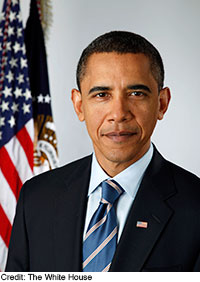 Last week, President Obama announced a change in his administration’s immigration policy regarding undocumented children. With an appeal to fairness and financial considerations, President Obama directed the Department of Homeland Security to focus its efforts to deport those who pose a threat to public safety or national security instead of talented young people.
Candidates for Prosecutorial Discretion
From Secretary Napolitano’s memorandum, an individual eligible for prosecutorial discretion will have met the following qualifications:
- Age. Came to the United States under the age of sixteen and is not above the age of thirty.
- Residence. Has continuously resided in the United States for a least five years preceding the date of this memorandum and is present in the United States on the date of this memorandum;
- Education or National Service. Is currently in school, has graduated from high school, has obtained a general education development certificate, or is an honorably discharged veteran of the Coast Guard or Armed Forces of the United States; and
- Criminal Background. Has not been convicted of a felony offense, a significant misdemeanor offense, multiple misdemeanor offenses, or otherwise poses a threat to national security or public safety.
Posted in:
Legal News


