


 Photographer Christopher Boffoli has filed a lawsuit against Twitter in the U.S. District Court for the Western District of Washington, claiming infringement of copyrighted photographs. The complaint alleges that “Twitter users copied numerous photographs from the Disparity Series without license or permission from Boffoli . . . . [and] were hosted either on Twitter or on third-party servers.”
Boffoli claims that Twitter could have removed the copyrighted photos from its own servers or “disable[d] each Tweet advertising or linking to” the photographs on its own or third-party servers.
Twitter’s Copyright Policy states that “We will respond to notices of alleged copyright infringement that comply with applicable law and are properly provided to us.” However, according to Boffoli’s complaint, despite repeated requests that Twitter take down the copyrighted materials, “Twitter has not removed or disabled access to the [copyrighted photos].”
 Pinterest
  On August 31, View 360 Solutions LLC, a subsidiary of Acacia Research Corp.,
 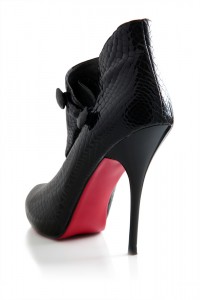 Christian Louboutin, a fashion designer best known for his use of red lacquer on the outsole of the shoes he designs, appealed the district court’s order denying a motion for preliminary injunction against alleged trademark infringement by Yves Saint Laurent (YSL). The court concluded that the district court’s conclusion that a single color could never serve as a trademark in the fashion industry was inconsistent with the Supreme Court’s decision in Qualitex Co. v. Jacobson Products Co., and that the district court therefore erred by resting its denial of Louboutin’s preliminary injunction motion on that ground.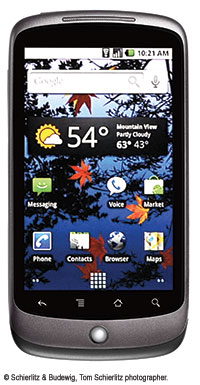
 On August 29, Multimedia Patent Trust (“MPT”) filed a
  Petitioner was found guilty of the murders of two brothers. The trial court sentenced Petitioner to death. The Supreme Court affirmed. Petitioner subsequently filed a habeas corpus petition for relief from the judgment of death. The Supreme Court ordered an evidentiary hearing on Petitioner’s claim that the prosecution had failed to disclose evidence that would have supported a case in mitigation at the penalty phase that Petitioner committed the two murders because of a Colombian drug cartel’s death threats against him and his family. The referee found merit to Petitioner’s claim. The Supreme Court upheld the determination by the referee and granted Petitioner’s habeas corpus petition, holding (1) substantial evidence supported the referee’s determination, and (2) it was reasonably probable that Petitioner’s penalty phase jury would have returned a verdict of life imprisonment without parole had it heard the evidence withheld by the prosecution.
 Blue Spike, LLC filed a
  Yesterday, a Northern California jury announced their verdict in one of the most highly anticipated decisions of the high technology era: Samsung must pay Apple $1.05 billion in damages for patent infringement.


