


 Josh Tauberer recently announced the release of “Open Government Data: Best Practices Language for Making Data ‘License Free.’ That document sets forth recommendations for federal agencies issuing data, and sample Creative Commons Zero (public domain) licensing statements.
In the memorandum, Mr. Tauberer and his colleagues discuss how open licensing protocols can be applied by various federal government authors—agencies in house, through contractors, or a mix—to different outputs, such as codes, laws, reports, etc. The overriding principle is that because the federal government’s material is not subject to copyright protection, a CC0 license will make it clear to users that the government disclaims its copyright.
When contractors are involved, things get a little more complicated: “Works produced under a contract with the government may be subject to copyright protection. Any such contract should specify that any copyright in the work is transferred to the government.” Transferring the copyright to the government, of course, obviates it, as federal government works are not subject to copyright protection under the Copyright Act. For mixes of government and non-government works, they recommend that “non-governmental contributors be required to waive copyright protection to their submissions,” which is another way of bringing taxpayer funded government work product into the public domain. This shouldn’t be a controversial proposition, but we’ve seen what happens when private standards are incorporated by reference into law.
 The Foreign Intelligence Surveillance Court has created
  The Electronic Privacy Information Center (EPIC)
  California’s Public Records Act
  Justia Summary: Since the Court’s 2003 decision,
  California is proposing to charge citizens to access and read court files and other public documents. The Administrative Office of the Courts has proposed that the state charge $10 for every name, file, or information that comes back from a search.
  President Obama
 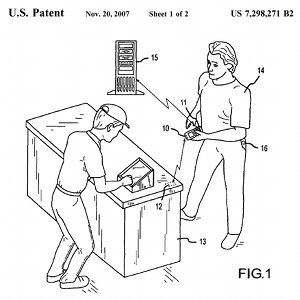 According to a new infringement lawsuit filed Tuesday in federal court (read it below), the
 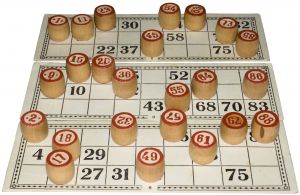 Dept of Texas, Veterans of Foreign Wars v. Texas Lottery Commission


