Articles Posted in 2012

by

Don’t the patent wars involving Apple, Samsung, and Motorola Mobility feel like they’re being waged almost daily?

Motorola Mobility filed the latest salvo with a new patent infringement lawsuit against Apple in a Florida federal court (see below).

The new case accuses Apple of, among other things, violating its patent for a "Receiver Having Concealed External Antenna." Motorola Mobility claims that it’s got a lock on all mobile phones with hidden antennas.

Really? Have they sued every mobile device manufacturer over this claim? When was the last time that you actually saw a mobile phone with a visible antenna attached?

by

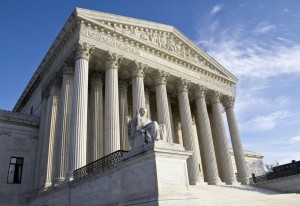
The Supreme Court ruled today that the government cannot use warrantless GPS tracking devices because doing so violates a suspect’s Fourth Amendment rights against unwarranted search and seizure.

Writing for the Court, Justice Scalia held:

that the Government’s installation of a GPS device on a target’s vehicle, and its use of that device to monitor the vehicle’s movements, constitutes a “search”

in violation of the Fourth Amendment.


by

You would think that Silicon Valley giants would compensate their employees well, support their professional growth, and know that a time will come when they leave for greener pastures.

C-level execs at Apple, Google, Adobe, Pixar, Intel, Intuit, and Lucasfilm apparently thought, acted, and communicated differently, however, according to newly revealed legal documents in an employee class-action lawsuit (see below).


by

Here’s a round-up of interesting cases from this week, as reported by our Daily Opinion Summary writers.

From the US Court of Appeals for the 10th Circuit, Ochoa v. Workman, which looked at the Atkins standard of mental retardation in a capital case. In that case, the petitioner argued that the trial court erred in applying the Atkins test to his mental condition at the time of trial instead of at the time of the crime. The Court denied his petition.

From the Supreme Court of Rhode Island, we have Higgins v. R.I. Hosp.

This case offered an interesting application of the firefighter’s rule, which bars public-safety officials from “maintaining a negligence action against a tortfeasor whose alleged malfeasance is responsible for bringing the officer to the scene of [an]…emergency where the officer is injured.” The plaintiff here brought a patient to the hospital while working as an EMT/firefighter. After he delivered his patient, he assisted a nurse with a disorderly patient, who seriously injured the plaintiff. The district court and Supreme Court found the firefighter’s rule barred the plaintiff’s recovery even though the plaintiff’s injury did not arise from the same circumstances that originally brought him to the scene.


Posted in: Legal News
by

Amazon.com faces a class action lawsuit (below) over cyber theft of personal account data from more than 24 million customers that did business with the company’s Zappos.com unit.

A Kentucky law firm filed the lawsuit against Zappos.com just one day after the footwear e-tailer’s servers storing customer account information were hacked.

According to Zappos.com CEO Tony Hsieh, customers’ names, e-mail addresses, the last 4 digits of their credit card numbers, birthdays, billing and shipping addresses, phone numbers, and cryptographically scrambled passwords were stolen.


by

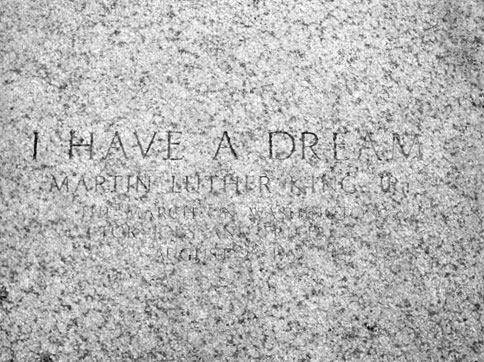
A few years ago, I was visiting Washington, D.C. and stopping by the usual tourist attractions, when I came across this plaque dedicated to Dr. Martin Luther King, Jr.


Posted in: Legal Research
by

The U.S. International Trade Commission issued an eagerly awaited determination today in the ongoing Apple iOS v. Android OS patent war, giving a win for Motorola Mobility, whose $12.5 billion acquisition by Google is pending.

ITC Administrative Law Judge Theodore R. Essex’s initial determination was that Motorola’s Droids smartphones do not violate 3 patents at issue: ‘828 ‘607, and ‘430 patents.

The decision is not final, however, because it still needs to get the official sign-off from all six ITC members.


by

A Freedom of Information Act (‘FOIA’) lawsuit (below) by the Electronic Privacy Information Center (‘EPIC’) reveals that the U.S. Department of Homeland Security paid contractors to monitor Facebook, Twitter other social networks, blogs, and comments on news media websites.

The documents (below) disclose that the federal government paid at least $1.16 million to private contractor General Dynamics to monitor social networks, blogs, and news media sites for “public reaction to major governmental proposals with homeland security implications.” That’s government bureaucratic-speak for public dissent.

The legal implications of U.S. social networking surveillance programs tracking dissent of its own citizens, even with open source tools, are deeply disturbing.


by

As you may know, Justia provides free daily opinion summaries for all state supreme courts and the federal courts of appeal. We’ve asked our talented attorney writers to send us the most interesting, funny, or important cases they come across each week, and we’ll run them as a column here on the blog.

Awad v. Ziriax, et. al., US Ct. App. 10th Cir.
This case made the news this week, when the 10th Circuit upheld an injunction against a controversial ballot initiative in Oklahoma that would amend the state constitution to prevent courts from considering or using Sharia law. Plaintiff argued that this law would violate his rights under the Free Exercise and Establishment clause of the Constitution. The 10th Circuit found that his claims were justiciable, and upheld a preliminary injunction against the law.


Posted in: Legal News
by

Super PACs a/k/a “Independent-expenditure Only Committees” . . . they seem to be all over the news these days, don’t they? These organizations, which came to fame through the 2010 Supreme Court Citizen’s United decision, garnered lots of attention right out of the gate. In 2010 alone, almost 80 super PACs emerged to spend more than $60 million to elect or defeat federal candidates. (Super PACs in Federal Elections: Overview and Issues for Congress, CRS 12/2/11).  Super PACs stand to be an even bigger force this year as we head into the Presidential primaries and the general election so I thought I’d share the small collection of resources I’ve come across lately which might help us all better understand what kind of ride we might be in for in the coming months.


Posted in: Legal Research